Friday, April 27, 2007

poets, essayists, and eye candy


Wow. Bret Lott, I love you, man. The Southern Review is publishing my two favorite poets, together, in the same issue. Is this rare? Consider that neither poet has published a volume of work. To catch their poems, you would first have to know when and which journal they might appear and then you ante up for one, maybe two poems. I have in my possession only three of Margo Berdeshevsky’s, xeroxed. I’m luckier with Allison Smythe. She is a longtime friend and critique partner and I am the blessed recipient of many more delicious lines and in the know on all her acceptances. Still. Having them both in one fine journal (and able to say I’ve shaken the hand of the editor) well, that is both rare and fine.

Another friend and nonfiction critique partner, Lisa Ohlen Harris, recently gifted a book to me by a writer of essays that she promised was near as good as reading Annie Dillard. I had my doubts. A slim volume, The Green Heart of the Tree, by A. S. Woudstra, is a compilation of essays written at a bamboo desk on the northwestern coast of Africa. I love these essays. Every word. I hesitate to tell you anything at all about them for fear you might presume familiarity and not buy this book. But these are some of the best essays I’ve read in a very long time. I love an intelligent and sensitive narrator; one who is well-traveled, understanding, a conduit by which I see and taste the red dust of her dirt road. Oh please buy this book. It is deliciously good.

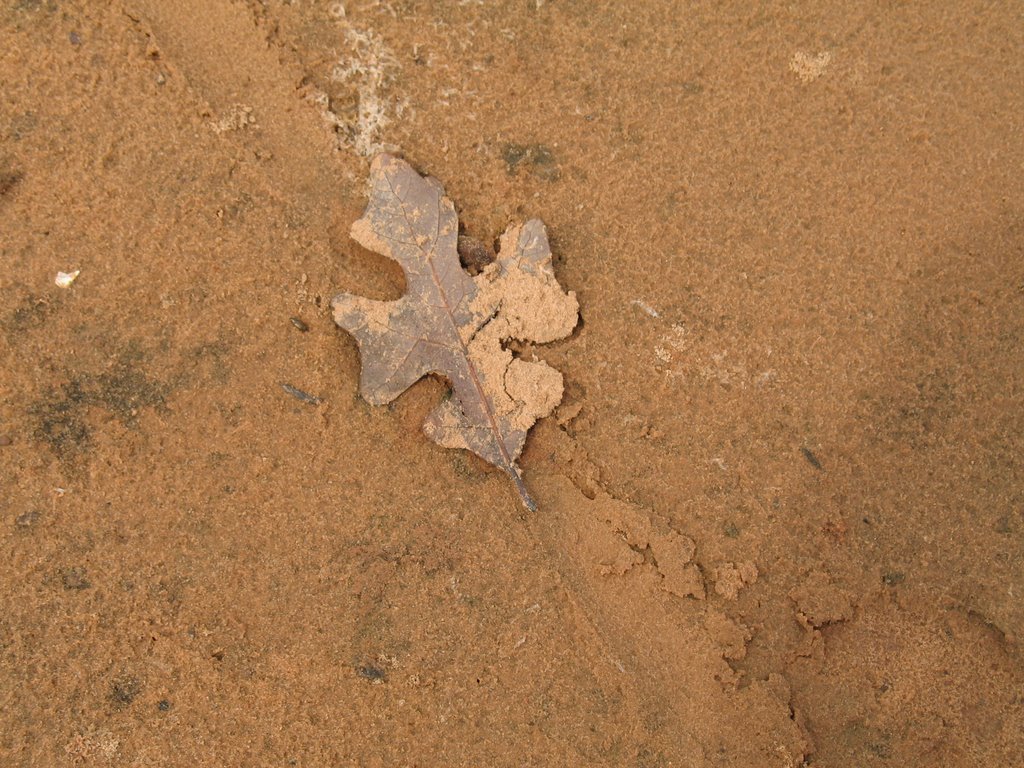
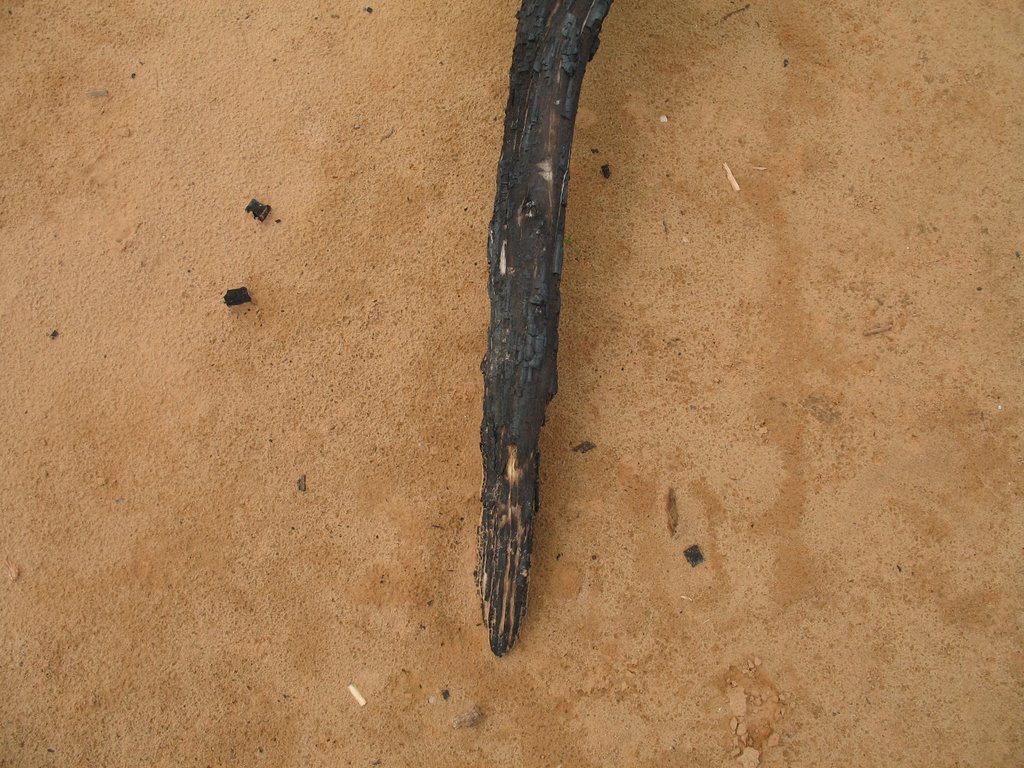
And now for some deliciously good eye candy, revel in what Spring brought to us two weeks ago and only thirty minutes south of Dallas. It beat my beloved Washington-on-the Brazos annual retreat outside of Houston, though I missed meandering those paths with old friends.


Wednesday, April 04, 2007

Primaries


The world is exploding in color and vibrancy and I cannot possibly keep up. I'm three or four blogs behind, with news and muse vying for attention, pushed to the back burner to stew some more because the immediacy of Spring will not, cannot wait. The birds have my attention these days (you'd think I've never before seen the siren red of a cardinal) but lore says a pair of them brings love into your life. Along with rock doves, black-capped chickadees, bluejays, and mockingbirds, the cardinals' songs serenade and woo us. Rarer stil the pair of shy mallards down the creek and the brief reign of the wisteria, though no sign of the racoon or egret or hawk from last year.


Spring is clarifying: The pollen and dust washed away by the rains; the newly clothed trees rocked by March winds; the world once again able to breathe with new-leaf oxygen. In these moments, the fog lifts from a depressed stupor, my eyes come into focus, and I live in the urgent now. Look to the ant, to the damselfly, the rabbit, the moon.


Wednesday, February 28, 2007

The Beautiful Ache

My friend Leigh McLeroy has released a new book titled, The Beautiful Ache, published by Revell. I will buy it because I know Leigh, and I will like it because we like so many of the same things. I will recommend it because she is a writer's writer; she studies the masters and thinkers and poets we all admire and I am sure you will appreciate my recommendation.

Or I can point you to this interview by Glenn Lucke, over at Common Grounds, and let you make up your own mind. This is one of the best interviews I have read in years, in part because instead of giving Leigh a prescribed list of questions, Glenn actually responds to Leigh's answers and presses for further thought. I felt as though I was eavesdropping on a heated debate tucked in the corner of Taft Street Cafe.

As Glenn explores some of the topics in Leigh's book such as the Ache for Adventure, the Ache for Worship, and the Ache for Love, he won't be satisfied with sound bytes and convenient answers. Trusting in their longtime friendship, Leigh replies honestly and poignantly and gives the reader a true flavor of her wit and wisdom.

The interview is posted over a three-day period and the best part (for writers) is in the third installment. I wish every interview I read could be this much fun.

Friday, February 16, 2007

i "heart" u

Thank you, Secret Valentine. Your box of truffles turned a terrible, horrible, no-good day into something sweet.

Friday, February 02, 2007

Building a Memory

It started in the carpool line. Rain pelting the windshield with little white balls of sleet shifted. Snowflakes as large as dumplings fell into a child's hair and didn't melt. The boys stopped and looked skyward. The parents giggled. We woke up this morning to world like sifted sugar on chocolate cake. Snow angels, ice balls, holly berries, red-breasted robins, icinged gazebo. We warmed our fingers by a fire and drank hot chocolate. This morning, it's all ours.


Wednesday, January 31, 2007

Building a Mystery

I've been on a Sarah McLachlan kick since I "discovered" her Christmas cd in Starbuck two months ago. I'm a little late, I know. I wait until Sunday mornings to prepare esl lessons for the UTDallas graduate students from China who visit our church to learn about American culture and practise their English. The editors at Relief hyperventilate as I stall and reread submissions up to the very last possible minute. And two days ago, I dimantled the cone-shaped fire hazard occupying the tv stand. While the girls lay prone on the carpeted floor watching reruns of Curious George, the four foot tree I'd bought on my way home from work late one December night had dried to a crispy version of last summer's drought. So it wouldn't disentegrate into the carpet, I lifted the tree, light as straw, out the back door before removing the lights. The stubble on the concrete, a barren crop circle. A fact of gravity and lack of water.

I have a problem with procrastination. It is a confession I make with no real knowledge of how to change or if I should. Procrastination is a fact in my life and why is the mystery. The when of my memories is as mysterious as the acts themselves. While others work to build a mystery, I follow the winds of change. It's a condition abhorant to proverbial wisdom. I think that wisdom calls it sloth. Which windows of opportunity have I missed while my tree dried and the ornaments collected dust?

Tuesday, January 30, 2007

mysterium tremendum

Your best guess on the origin of this mystery.

Saturday, January 27, 2007

News Buzz

Relief Journal has just posted the author lineup for the Winter 2007 issue due out in February. Take a peek here at the awesome writers who will be messing with your head in just a few days.

Thursday, January 25, 2007

mudmen

When building men, the snow seems a purer medium, I suppose. Unless, like the Emperor Qin, you desire an army of terra cotta warriors to command in the netherworld beyond Xi'an. Or, like God, you desire a friend made from terra firma. But a child's need to create transcends having the best materials. It's still three parts snow or mud formed by hand, placed one on top the other until a pyramid of sorts, a stocky, rounded man, appears. Rocks for eyes, sticks for arms, leaves to crown the head, breath to warm and mold the clay into sentinels of art and joy and need.

Monday, January 15, 2007

On Ice

We were on tinterhooks all weekend, waiting. Venturing out for a drive to the mall in the freezing rain, we'd hope the roads wouldn't ice before we got back. On Saturday, the saturated trees began to bead and then freeze, suspended on the branches by a molecule strong enough to resist gravity. The ice storm never really materialized in this part of north Texas, though our neighbors to the west might disagree. The glazed roads mirror the street lights and the cars fish tail on the ice but the world has not stood still. Not like the winter morning in Houston years ago when I awoke from a dead sleep. A hundred miniature windchimes echoed in the stillness, an eerie quiet that seemed louder than the chimes. No cars hummed along the roads, no doors slammed, no dogs barked, no sirens signaled danger. I felt raptured from the dead and followed the sound of the chimes to my window, nearly frosted over with a thousand dendrite flakes. I opened the door and let in the cold stillness, squinting my eyes against the light. The air breathed in chimes, tinkling and shimmering tiny bells of sound. It was the trees. Iced and glazed with tiny daggers they bowed their limbs in the wind, brushed their frozen nakedness against the nearest neighbor, and sang like winter fairies.
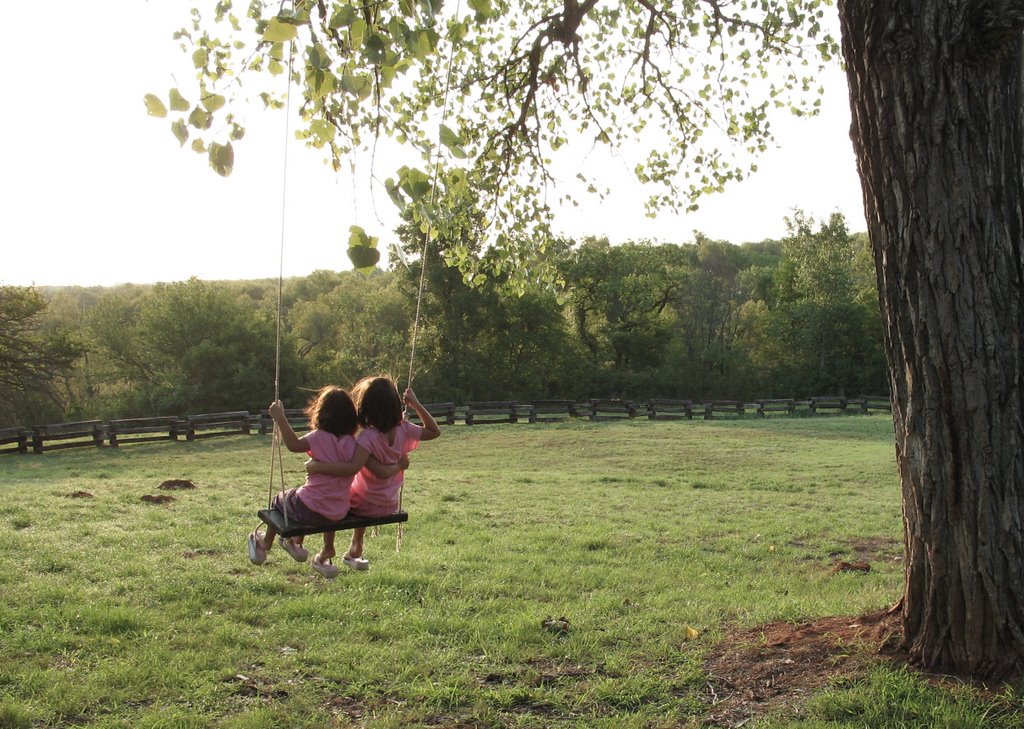
Late this morning, the world is melting and drips a slow and steady percussion. A chickadee flits to the Christmas wreath still hanging from the eaves and nestles in the cherry-red bow. I want to wait some more, in hope, to be raptured from the dead. The world has not long enough stood still.

Wednesday, January 10, 2007

speaking with tongues

Thank you Dave Long (Faith in Fiction) for the link to this article in last Sunday's New York Times. I am taken with the processes by which our minds create and think and expound. We often forget the importance of the tongue - that the spoken word is the power by which God creates. Imagine God typing a memo to Michael: Bring me dirt that I may form man.

And for more on the typeset word, check out my new "button" to Shelfari (scroll down and to the right) which allows me to display my library. I'm still in the process of loading the isbn #'s, but it's way more fun than keeping my list in a suitcase! What's on your shelves?

Monday, December 11, 2006

Hole Empire


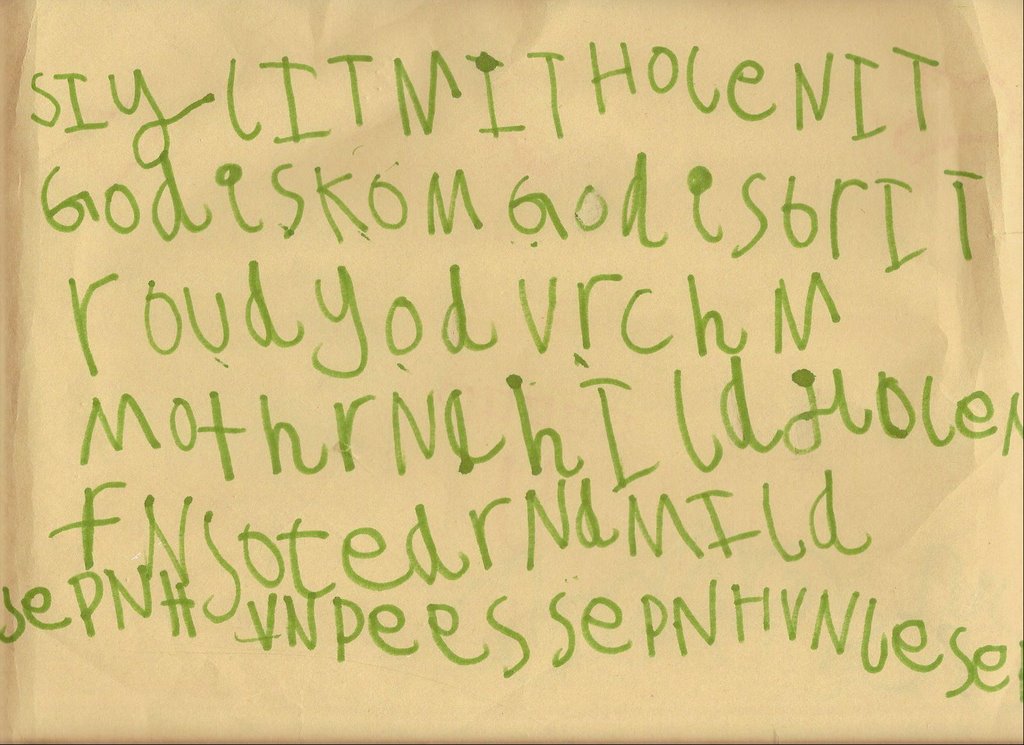
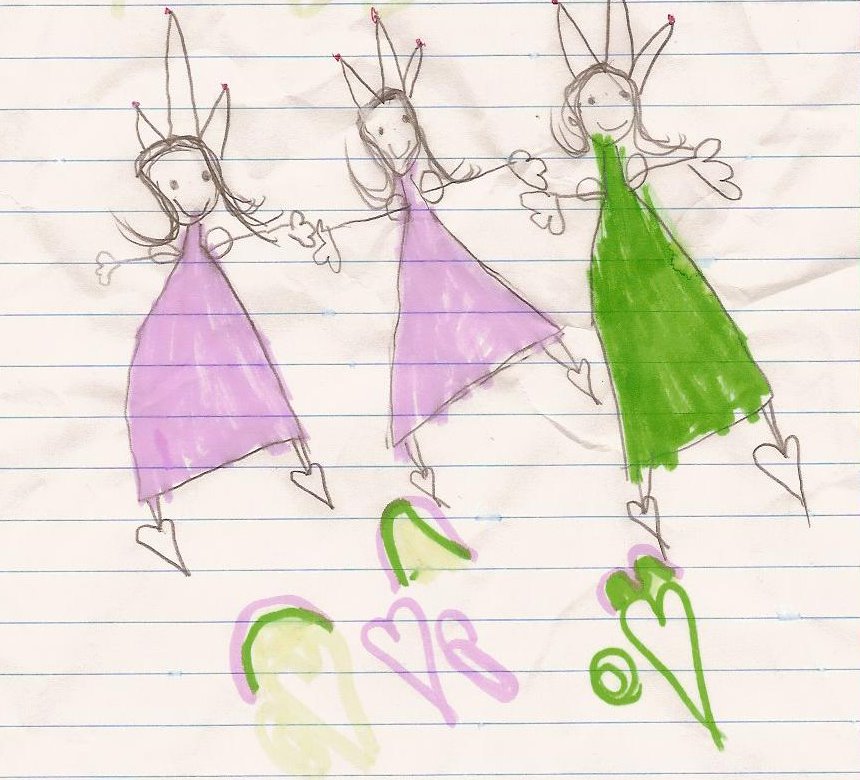
I've been listening to the title song from Kemper Crabb's The Vigil (music by Dave Marshall) lately and Bethany has picked up on some of the words like "Holy Empire." She tells me nothing is Holy but God so I had to explain something about God's holy empire which Hannah word-leaped to this Christmas carol she penned. Merry Christmas, and may you sepnhvnlesep.

Tuesday, November 21, 2006

oh frabjous joy! callou! callay!

I'm holding in my hand the "it" that I've been pining for and I've been savoring every word. Brad (my husband, not to be confused with Brad the poetry editor) laughed at my absorption for I "already know what's in there." But I don't. Kimberly's introduction and Mick Silva's forward (both superbly written touchstones for why Relief exists), the layout and order of the content, the inside graphics and feel of the pages, and the majority of the poetry and fiction are all new to me. I truly am savoring every word and enjoying every minute (and I've only found one typo so far!). For those of you who don't get your copy before Thanksgiving, eat your heart out! And when you do, please post and tell me what you think.

(Title line from The Jabberwocky by Lewis Carroll)

Wednesday, November 08, 2006

relief


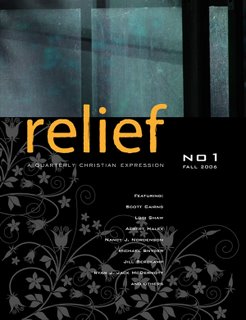
I am so proud of everyone that worked on this issue: Kimberly and Ben, Heather, Brad, Mark, all our spouses who gave their blessings, the writers, for they gave us their best work, and for the support of the writing community at large, for they are creating the buzz and then putting their money into subscriptions. Then when I saw the cover that Ars Graphica created for us, I knew it would fly. It is good. What a relief.

Saturday, October 21, 2006

Relief Press Release

The Master's Artist is running a series of interviews with the editors of Relief Journal starting Saturday, October 21, 2006. My interview is here, Kimberly and Heather's is here, Mark's is here, and Brad's is here.

Thursday, October 19, 2006

Stone Pillows

Hannah went to bed with a rock last night. Bethany told me about it this morning. That’s how it is when you’re 18 months apart. The youngest tells everything. Hannah has been loading up her backpack with schoolyard rocks and lugging them home to show me—every day. This one has sparkles. That one writes in chalk. I toss them out the back door and the next day she raids the playground again.

When Bethany learned to walk, she also headed straight for the rocks. She still does and the smoother and bigger the rock, the greater the value. We can’t take a walk by the creek without stopping for every chunk of concrete strewn by the sidewalk and those black river rocks are more desirable than a teddy bear. The Japanese Gardens adjacent to the Houston Zoo was a favorite picnic spot where we would go to feed the magnificent orange and white Koi but Bethany wouldn’t let go of the smooth, dark stones to throw the bread. They come by it honestly enough, I suppose. I loved rocks, collected rocks, read books about rocks, dreamed of spending my life walking all up and down and over rocks.

I dined with an amethyst when Derek and Jemma had their wedding reception at the Houston Museum of Natural History. We danced around Tyrannosaurus Rex, threw rose petals under Pterosaur, ate cake with diamonds, emeralds, and a 2000-carat topaz in the darkened corridors of the gem display lit only by the fiber optic glow on crystals. But this was a cold and distant affection. I could only stare in awe.


Now I throw my daughter’s granite pieces out the back door and beg her to stop bringing them home. Somewhere along the paved asphalt of my adulthood I forgot what rock-cold smoothness felt like—the weight and heft in my fingers—the pleasure of holding a pebble worn to glass by water. I forgot the way granite glittered in the sun like a thousand minute rainbows and made me feel so rich, so wealthy. I have forgotten how to love a rock so much I’d want to sleep with it underneath my pillow. Or, like Jacob, use it as a pillow.

In Houston, I once had dinner with a NASA engineer and his wife. Their home was a typical, early 60’s architecture desperate for remodeling. I entered their spare living room strewn with a first-grader’s toys, devoid of decoration save one very tall display case with a glass front. Glass shelves sparkled and glowed with rock formations, fossilized Trilobite, asteroids, and jeweled minerals. The man, a geologist, had scoured the world for his collection. Some were Christmas gifts from his wife. One was from somewhere beyond this planet. I held it in my palm for a very long while, mesmerized. The permanence, the history, the physicality of the stone in my hand whispered a name.

If we ever forget what it is to be a child, the rocks and stones will cry out.

Monday, September 18, 2006

The art of finding lost trash

We arrived at the lake in the early afternoon when the sun was high and the air was still. The brackish water, lacking the strength of a wave, niggled bits of trash onto the sand like an old woman pushing a broom.

“It’s down about seven feet,” grunted the teen with a beer in his hand. Shirtless and sweating, his buddies sat on the bed of their rusty Ford. No use.

We unloaded the girls anyway. A change of scenery wouldn’t hurt. I eyed a man under the bridge as he stood in his skiff and threw a net over the side. Shrimp in this lake? The girls ran past me and dug their toes in the orange sand, oblivious to the sad state of an Oklahoma drought. They were squealing and running from one piece of trash to the next.

“Mom!” “Look!” “Treasure!”

So I did look, through the eyes of my child, and saw the treasures the lake coughed up on the sand. It took a few minutes to adjust my perspective since I’m a visionary kind of person; I see things the way they could be, ought to be. Looking for beauty in tarry, orange sand requires blocking out everything you hoped for. I had to focus on one patch at a time. Then I saw the bugs and all their secret holes. If I stood really still they came out like the sand crabs in Galveston. I stamped my feet and they scurried to the nearest tunnel.

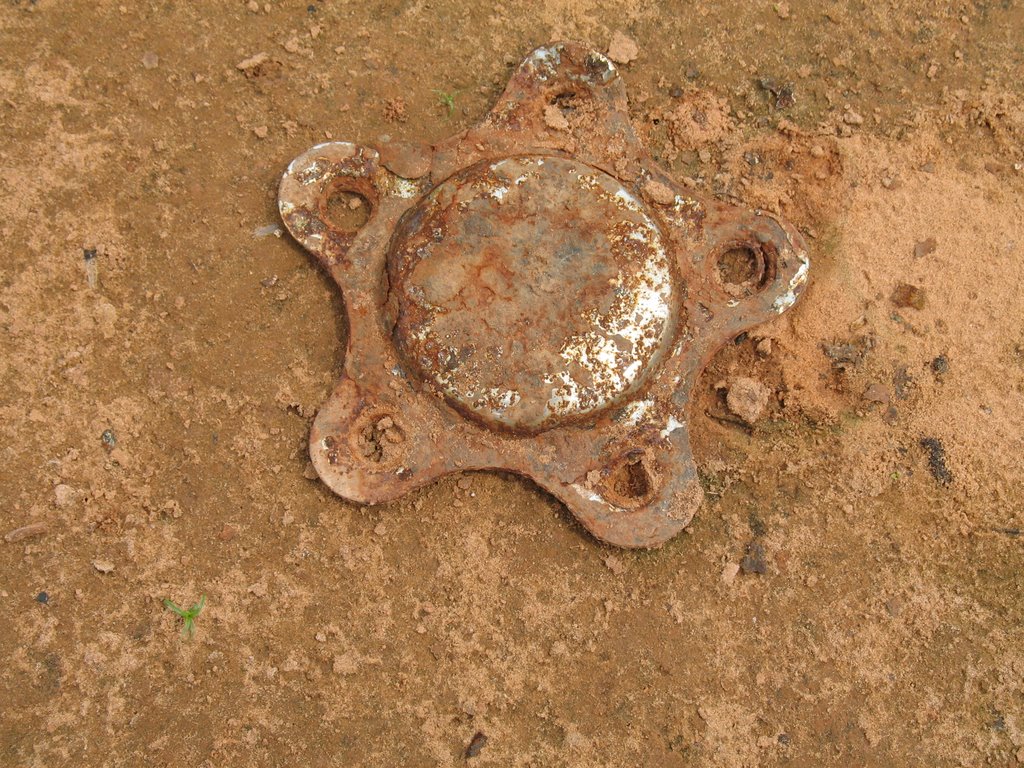
The blackened driftwood, soggy string, and rusted metal plate knitted together into an artistic collage as my mind struggled to contain the images. I know artists to take found trash, mix mediums, and create beautiful sculptures and reliefs. But here was art presenting itself to me, if only I could peel away the hope for something better.

I’m learning this in other ways: When I critique an essay what is the basis for my evaluation? Is the glass half-empty or half-full? Can I rejoice in pain? Is God’s grace sufficient for me? Blessed am I who thirsts! For then I shall know the thirst of others.

Monday, August 28, 2006

latter rain

In the month since I’ve written a web-log, I have traveled to Santa Fe for The Glen; Hannah has started Kindergarten; and I have been to Chicago to help steer the first issue of Relief Journal to publication in November. It has been a fruitful month and full of promise. But still, it had not rained.

My eyes have calmed down to a manageable state and I found respite in the summer rains of the high desert of Santa Fe and the lake-misted weekend in Chicago. I shed tears when Hannah left for school (though she did not) and this morning we started back to Brad’s grueling law school routine. I have pondered over God’s pharmacy of spittled clay and bargain-priced eye salve, and readjusted to my fifth-grade phobia of being called “four-eyes” on the playground. Silly, I know, when all of you wear them too, but insecurities die hard.

For over forty days, Dallas had temperatures over 100 degrees. For forty days, and then some, it did not rain. The earth split open like a jigsaw puzzle glued to lycra. But at midnight, when I disembarked from the Chicago flight to Dallas last night, I saw the lightening in the western sky. The air hung heavy and for once I didn’t worry about tornadoes.

This morning, as Bethany and I took Hannah to Kindergarten, they stuck out their tongues to catch the mist. By ten, the sky had darkened, and then it rained. It’s a soft, slow rain that blankets the grass; it will not flood the bayous like a summer storm in Houston. Nor will it stop the sickly yellow leaves from fainting off the trees. But it is enough—enough to pull me out of an air-conditioned stupor and join the voices of a great multitude that sounds like rushing waters and peals of thunder: the Almighty reigns.

Friday, July 28, 2006

I Thirst

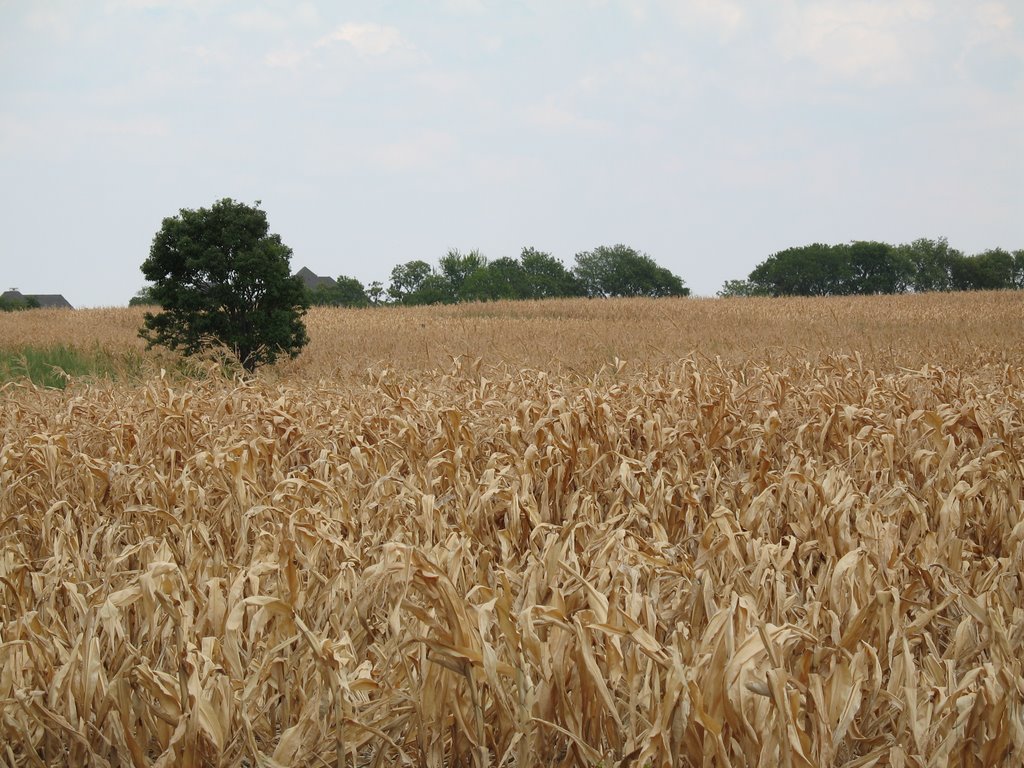
Heather, the associate editor at Relief Journal, recently observed that Christian poets really liked rain—a lot. Here in the west, we do too. And while an overused metaphor quickly becomes passé, a Texas cornfield could sure use about five hours worth of that passé metaphor.

Three months ago, I blithely wrote about “floppy-eared cornstalks” and the abundance of wildlife along our creek bed. I reveled in the mild spring and took long walks with the girls. The creek gurgled and my girls had tea parties in the verdant clover. These days, there isn’t enough water even for mosquitoes. The runnels are dry, the wildlife is gone, and the cornstalks across the road are bowing their knees in submission to a hot wind.

Three months ago, I blithely started down a new road as the cnf editor at Relief. I devoured submissions, trolled my favorite blogs, and then began reading the workshop submissions for The Glen, a Christian writing conference I’ll attend in Santa Fe, NM this next week. Thirsting for community and desiring to make a good impression, I stayed up late and read into the morning. One morning I woke up, and my eyes ached. They wouldn’t move. For two days I couldn’t wear my contacts and by the third day, I filled a year-old prescription for glasses. They didn’t help. After an eye exam, I discovered that age, and thirty-five plus years of contact wear, had taken their toll. I had “dry-eye” syndrome and it would never get better. I would have to learn to manage the symptoms of dryness.

Every day, as I put in various drops to lubricate my source of vision, I regret taking advantage of something so precious and valuable. Every day, I have to limit my reading and force my eyes to rest. On Sunday, my sister’s pastor mentioned an old friend in west Texas. He recently asked this third-generation Texan how the drought was affecting her crops. Instead of whining about the weather, this seasoned old soul responded, “Oh, it will rain again. It always has. It always will.”

Let there be rain. Let there be rain. Let there be rain.

Thursday, June 29, 2006

The Shadowland of Shibboleth


Xibolai. The seminary student was using it a lot and I felt pleased I could translate my favorite Chinese word. It means "Israelite" and sounded remarkably like my favorite Hebrew word—Shibboleth. You may have heard the word shibboleth. In modern usage, it refers to an entrenched belief or custom that defines a culture. Depending on how you pronounced it in Hebrew three thousand years ago (it meant growth or flow), well, it could have you killed.

The book of Judges tells the complex story of inter-tribal conflict between the outlaw Jepthah of Gilead and the men of Ephraim (all of them Israelites) that led to land grabbing and warfare. When the men of Ephraim tried to cross back into their land, the men of Gilead would force them to say the word Shibboleth. If they said Sibboleth (an ear of corn), there was no mercy.

Unfortunately, Xibolai (希伯来语) was one of only ten words I could translate during the sermon. So, for lack of anything else to do, I began computing. This July 4th weekend marks the sixth anniversary since I returned from a three year teaching stint in China. If I had continued my language studies and learned just one Chinese character per day, I would be literate in Chinese. If I continued learning at that pace for the next three years…. Look at it this way: a scholar knows at least 5,000 of the 10,000+ unique characters in the language and based on my computations, I’d be downright scholarly.

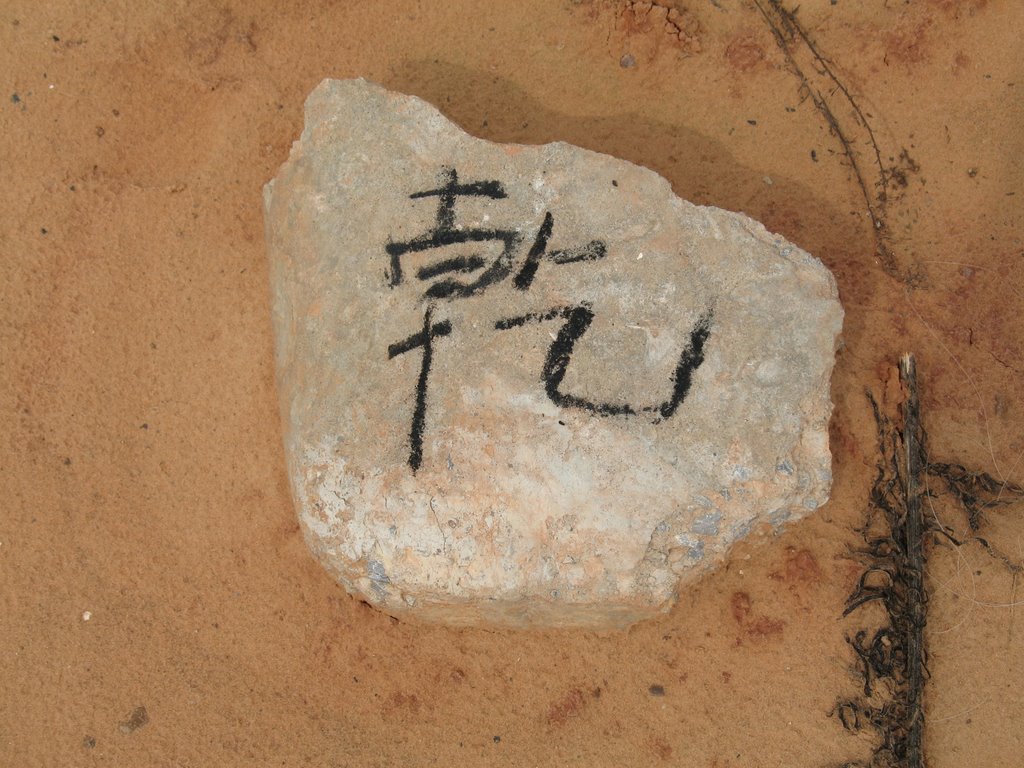
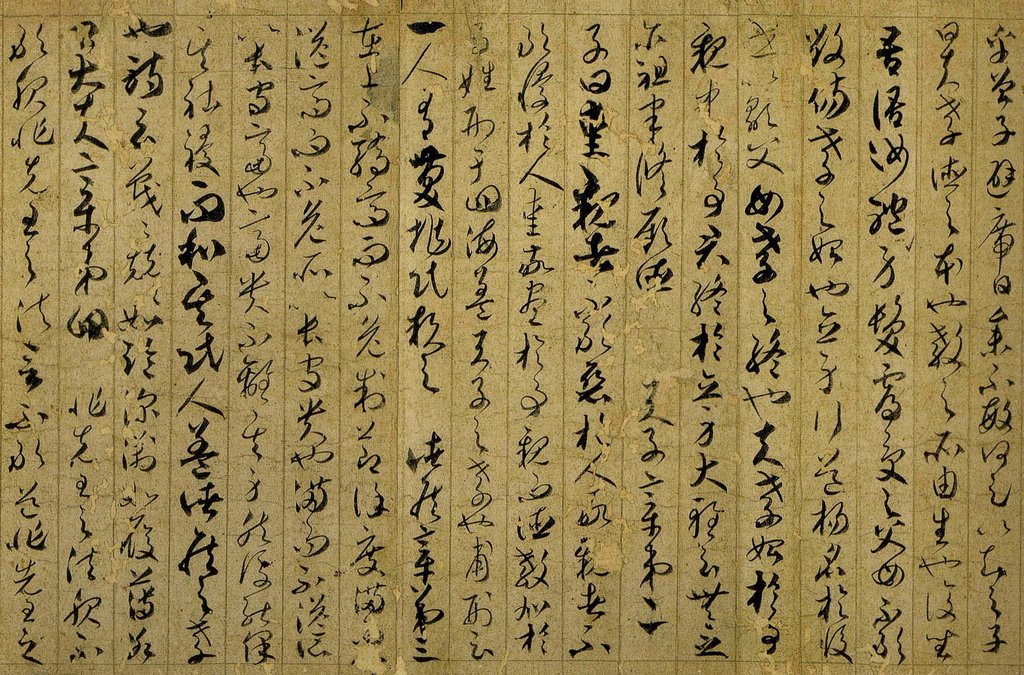
Sunday afternoon, I dusted off my language books and methodically penned the calligraphic strokes of my first word: (tone 3), which means woman, girl, daughter. I was so impressed with my ability that I decided to move on to zi (tone 3), which means infant; child; son. My calligraphy looked good to me and I moved on. The next word was hao (tone 3), which means good; right; excellent. Interesting, at least to my eye anyway, was that the composition of this character combined the strokes for woman and son to form the character for “good.” Hmmm. Turning the page, I rediscovered the word for peace, which is: an (tone 1). This character placed the strokes for “woman” under the strokes for “roof.”

Brad walked in about this time and I showed him my resurrected skills. He was my informal language coach in China and he used to shower me with kisses whenever I did well. I’m not sure why we quit our lessons, but I do remember being thoroughly frustrated by the tonality of the language. After a few serious faux pas, such as encouraging people to “eat night soil” instead of “eat more food,” I gave up. Kisses or no kisses, it was easier to communicate in English.

I mentioned my observation of the characters and how they reflected the shibboleths of the culture. If a son with a wife means “good,” and a wife under a roof means “peace,” then what would be two girls and a wife under a roof? My challenge was meant as a rhetorical question, a prompt for cheese that might elicit a witty answer like “love” or “happiness.” He looked at me for a brief moment and in his eyes shone the telling signs that I had made another classic faux pas. My husband exhaled (had he been holding his breath?) “It’s the word for adultery,” he said. “Don’t go trying to make up words in Chinese. It can’t be done. But you’ve done a very good job writing your characters.” And he kissed me.

(calligraphy work by He Zhizhang, Tang Dynasty poet)

Tuesday, June 20, 2006

In Father's Hands

They put him in the back of a nearby taxi and drove him to the hospital. That must have been the bravest taxi driver in all of China. Bruce with his shirt all bloodied, mumbling words in English; his friends beside him white as ghosts. Any taxi driver in his right mind would refuse service as a temporary ambulance. If the victim died, their spirit would forever haunt his car. But Bruce’s spirit would not remain in a Chinese taxi. He was mumbling words of forgiveness for his attacker, the mentally ill son of a family he knew. And perhaps, as the graying city landscape careened outside his vision, he prayed for his daughters—all five of them. It’s all in Father’s hands, he’d say.

Valorie discovered she was pregnant with their sixth daughter less than a month after Bruce died. She remained firm with the officials who encouraged her to go back to America. American rights were never uttered; she never spoke a word of complaint or asked for revenge. The locals were relieved that the international incident quieted so quickly and they let her stay. In the native dialect, she implored them to allow Bruce to be buried in the city. Even citizens were required to be cremated; there just wasn’t enough room to bury city people. But Valorie won their respect and Bruce was buried a taxi drive away. The girls made cards for the young man in prison. “We forgive you for stabbing our daddy,” they wrote in their little-girl scrawl. And they prayed for the son of their friends.

Valorie and the girls stayed in China. Local women from the state-run church helped her cook and clean their little apartment. She birthed daughter number six in the city hospital where Bruce had caught the last four babies in his hands as they came out. This time she went home alone to nurse and home school the girls and practice her Chinese calligraphy.

Simon began to call over the next several months. Bruce had mentored him for many years and it was the least Simon could do to honor his friend. Over time, the younger girls began to call him Baba. They married and, within a year, had daughter number seven.

I have pictures of Bruce and Valorie and their five towheaded little girls. After the service at the state-run church, the old grandmothers would touch the gold of the girls’ hair. A small man, Bruce would hold the girls on his knees and call them “arrows in his quiver.” He cried one morning, with his daughters in his lap, when the Chinese told him about their abortion laws. How do you tell a man with a pocket full of gold to throw it all away? I never met Simon, can’t even imagine the burden he has taken on to raise so many daughters in a culture that reveres sons.

Valorie sat on my couch in far north Dallas last week, nursing daughter number eight. Somewhere along the way I missed a newsletter, missed the news of this new little arrow. Giggles erupted from my own girls’ bedroom. There were ten little daughters in my apartment! It was Valorie’s first trip back in four years and she was driving north to Iowa. It was also the first trip back for the three youngest girls. Simon stayed in China. The American consulate didn’t believe he would return so they wouldn’t issue him a visa. Imagine that. The Chinese officials showed more grace to a widowed foreigner with six daughters than the American government could muster for a man with eight. But Valorie wouldn’t want me to say that. It’s all in Father’s hands, she’d say.


[Portrait of Wu Fu, Brigadier General of the Gansu Region. Hanging scroll; ink and color on silk. With an attached inscription in Chinese and Manchu, signed Liu Tongxun, Liu Lun, and 'Yu Mingzhong, dated Qianlong geng chen, 1760, inscribed, and with one seal of the Qianlong emperor, Qian Long Yu Lan Zhi Bao. www.wickimedia.org]

Friday, June 16, 2006

On Creative Nonfiction

Kimberly Culbertson, the Editor-in-chief at Relief Journal, has posted my ideas on what defines Creative Nonfiction. Here is a taste to whet your appetite:

Unfortunately, most people, even many writers, are clueless about what this new genre is, what it isn’t, and how to write it. You see, adding that word creative to the generic word nonfiction changes everything. Sifting through the many submissions in this category here at Relief Journal, it is clear that the misconceptions are rampant. I’ll leave the how to write question to others but, for this moment, I’d like to slice away those misconceptions and define the term.

Remember, submissions deadline is August 1 for the November print issue. I hope to see your piece in my editor's box for review.

Monday, June 05, 2006

Princess Pool Party


It was her birthday all day long and she ruled her subjects with a dimpled smile. If she could have anything, we asked, what would she want the most?

Roses. (She's like her mama, through and through.)

And to eat, we asked?

Pig ear. (She's like her baba, too.)

She got her roses - hot pink ones. But we fed the guests chicken wings and corn, grilled out by the pool while the girls built sand castles and swam like mermaids. Happy 5th birthday, Hannah!

Thursday, June 01, 2006

The Fifth Day


I was prepared for the suburbs. I was not prepared for far north Dallas. So far north, we have to pay extra money to the phone company for the privilege of dialing into Dallas. I knew there weren’t many trees here. It’s a flat land, good for ranching. The grass turns to straw in the summer for lack of rain. The sky is big, with a blue intensity that reminds me I am small.

The best I hoped for, in our price range for an apartment, was the ground floor with a patio and maybe, just maybe, a grassy area the girls could play in. I never expected trees, or water, or living things, other than fire ants and the neighbor’s dog. Who knew that Dallas had so many creeks and nature preserves? Or that this year’s spring weather would be the longest on record?

Our patio empties into a yard, which backs up to a creek with walking trails, a dense line of trees, and the kind of wildlife I remember as a kid. My girls can already identify the cardinal’s song, the blue jay, the rock dove, and the mockingbird. Last Fall, under a cloud of red and gold leaves, they learned the stutter of the red-headed woodpecker.

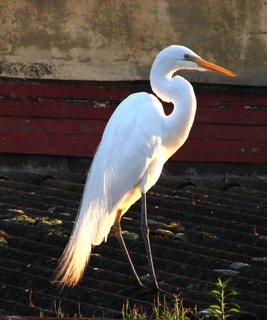
One morning after a hard rain, when the creek smelled of pear and wisteria blossoms, we watched a white crane fishing for minnows. His S-shaped neck dipped and he brought up a large gold one. Mr. and Mrs. Mallard prefer the bend of the creek near the pecan trees, though we have yet to see the rest of the family. There was a commotion in the trees last month when a young hawk stole a rabbit from the mouth of his brother hawk. Their wingspans are as long as Hannah. Last week, while the magnolia trees bloomed, we spotted an owl that screeches late at night.

Bandit, the raccoon ambles across our patio and raids the neighbor’s cat food. We’ve seen a ‘possom sleeping on a tree branch, rabbits still as statues while guarding their hole, and squirrels playing tag. Monarchs land on our arms, blue and green damselflies flirt around our feet and we’ve only seen one snake – a large one – in the rill near the myrtle trees. On Memorial Day, the four of us walked to the mossy end, where it runnels into the golf course, and we threw rocks into the shallows. We picked wildflowers: carpet strawberries, buttercups, dandelions, queen-anne’s-lace; and then we brought home chiggers.

They manifested on me the next day, and Brad came home with the angry red bumps last night. Luckily we sprayed the girls before our walk and they are fine, but for me, well, all the questions of the curse are on my mind. Just why are there mosquitoes, and fire ants, and venomous spiders that hide in my closet? Our little patch of Eden no longer feels so special. The weather is getting hot, the corn is wilting in the fields, and until I buy some good insect repellant, I am retreating into air-conditioned suburbia.

My friend Sherry, who raises llamas on the outskirts of Austin and contends with mountain cats raiding her chicken coops, will laugh at me. After all, neither of us really live in the forest. The city is always nipping at our heels, chasing the wildlife farther afield or swallowing it altogether. Who wants to live together with snakes and lions and biting ants? I’m not sure which is the bigger curse.