Showing posts with label China. Show all posts

Monday, February 16, 2009

On Poetic Justice

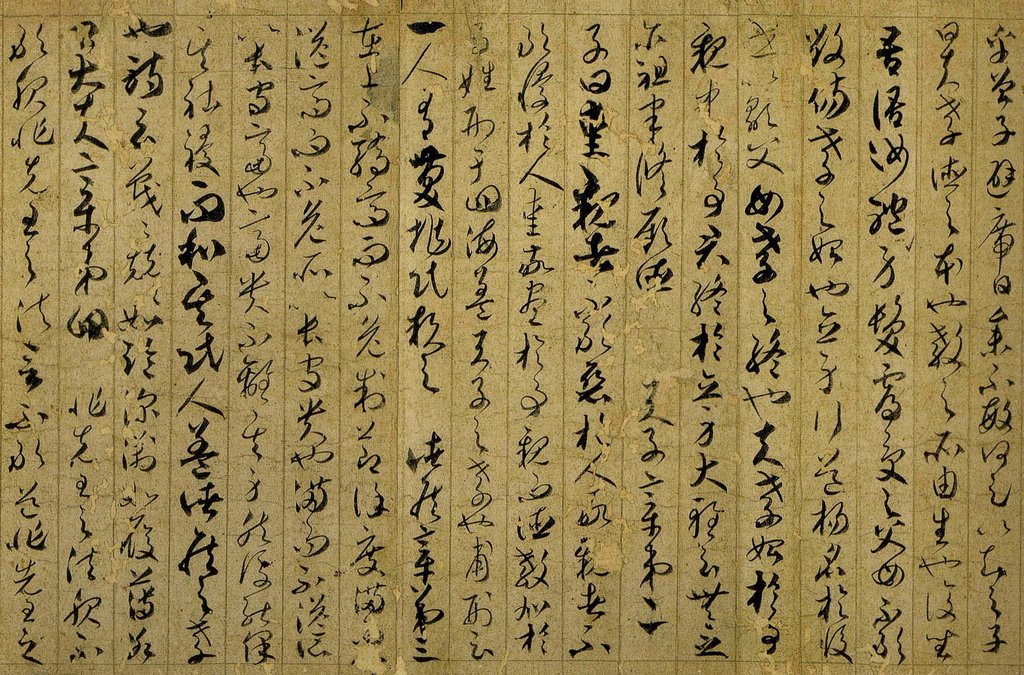
"Li Po Chanting a Poem",
ink on paper, by Liang K'ai (13th century)

I glanced up as the plump, middle-aged, Chinese woman rounded the corner and strode through the church coffee bar, passing my husband and daughters, until she stood square in front of my chair holding a stapled essay. My husband looked perplexed. Clearly I had a sign on my forehead visible only to Chinese visitors who wish to have a blonde grammarian check their writing. I'd never met this woman and still don't know who she is for, without an introduction, she shoved the essay titled "The Consequences of Drunk Driving" in my lap and asked me to check the verbs. Her English was halting but with complete confidence that I could help her.

Three double-spaced pages detailed the devastating physical and emotional trauma caused by driving (and getting arrested) while drunk. Prison, guilt, loss of life, financial ruin, she named them all. The essay was chock full of cold facts and figures, but with few grammatical errors. Toward the end, the author referred to a previous blog post that explained details not relevant to her essay.

"Did you write this essay," I asked.

"Oh, yes," she said. "I write this essay."

"Can you tell me about this blog post?"

"What is blog post?"

"Well, I see nothing seriously wrong with this essay except you must be sure to credit all of your sources."

"I write this myself."

"I understand. You did a good job but if you do not tell every place where you found information, your teacher will give you a bad grade."

She nodded and seemed pleased there were no errors. She thanked me and she left. Why try to reinvent the wheel? And certainly, passing the class is far more important than losing face by exposing poor writing skills in a foreign language. Besides, the teacher wants information, not what I think. You see, in her mind, cobbling together a few sentences from esteemed sources constitutes good writing. The Eastern mindset venerates expert opinion and writing.

In Wuhan, China where I lived for three years, I often visited a site near the Number 1 Bridge over the Yangtze River. Built in 223 A.D., the Yellow Crane Tower has been destroyed and rebuilt several times, yet is one of the central landmarks and tourist spots in the city. With a 360 degree hilltop view of the tri-cities below, over the centuries, it has also captured the imagination of scores of poets. The most famous of the poems tells the lore of a man who, while visiting the tower, was carried away to the celestial city by a crane. Written by a renowned poet of the Tang Dynasty, it is considered one of Cui Hao's best poems.

But what captured my imagination during one visit with a translator, was that there was another, equally famous poet during the Tang dynasty who visited the Yellow Crane Tower and read Cui Hao's poem written on the tower wall. Struck by the greatness of the poem, Li Bai (Li Po) vowed he could do no better and would never write again. I was floored until I heard this sentiment repeated again and again during those three years: once greatness is achieved, there is no use going down that road again.

Li Bai does (thankfully) write again and, ironically, in an ensuing series of poems reminiscent of Salieri's frustration with Mozart, his obsessession over that poem on the wall results in some of his most enduring works.

Here is a translation of the poem that inspired so much.

The Yellow Crane Tower
Cui Hào 704-754
The ancient one
flew off on his yellow crane,
Now this place is empty
only Yellow Crane Tower remains.
The Yellow Crane
once gone never returns,
White clouds for a thousand years
empty and remote.
Boats and Hanyang trees
reflect in clear water,
Lush vegetation thrives
on Parrot Shoal.
At dusk I ask for news of home,
These mist shrouded waters
heavy on my heart.

Translator: Dongbo 東波

Monday, January 26, 2009

Year of the Ox

Chinese Dolls

It is New Year's Day for over one quarter of the world's population. My mother-in-law just couldn't understand why the girls went to school and her son had to work. There should have been fireworks and food and family from all over China. But this is America. Though we had fish last night and a feast with friends from church the night before, I know she misses the two weeks of festivities and friends. She'll want to burn paper money to honor her deceased mother, give red packets of money to her oldest granddaughter, eat vegetables from her garden, hope for a good planting season.

She is out of her element here in our home and she is not used to sitting indoors. I show her pictures of when I visited her home for Chinese New Year (ten years ago) and wonder if it will only make her sigh more deeply.

During the feast with friends we met a seventy-nine year old woman visiting from China. Her father was a Chinese minister before the revolution yet she went to Nanjing University in the early fifties. I asked her how she was able to survive the red guards during the sixties and her eyes welled up. It was too painful to discuss, she said in halting English. Her mother was a westerner from California, she said, as she hugged me and asked for my address. I hope she writes to me in this year of the ox.

Friday, January 09, 2009

Galveston, Oh Galveston


The old year finished in the perfect place - a place in recovery, buffeted by calamity, yet hopeful. Galveston is a favorite retreat of ours, anchored by old friends from Houston. We mourned to see the wreckage of so many homes, the upending of so many boats; we rejoiced that our friends' home survived, though bruised. On the first day of the new year, we walked along the sea wall and I began collecting rusted rebar, flic-flac, and such things that no one else would want: pieces of our memories left on the jetty.


The kids joined in, filled their hands with fishing line and other bits, and a curious Russian stopped us with his thick accent and inquiries. "Why do you do this thing?" he said, standing on the seawall in front of our car. "I make things," I said, doing such injustice to all the times we'd spent there building sandcastles, watching dolphins, catching crabs and fist-sized dragonflies, while all around us the wounds from hurricane Ike lay exposed and in decay. Why do I do this? My Chinese mother-in-law struggles to understand why I pick up rusted trash on our walks at home but give away useful clothes and shoes. Why do I find such beauty in rust, and peeling paint, and heaps of discarded metal? Why does Wayne like cardboard and Allison like broken dolls? Why do my children love rocks and dirt?

Back at the house on Tiki Island, the other guests, a Chinese family attending seminary in St Louis, turns soft floury dough into thin discs for dumplings. They are from Beijing, where the people love to laugh and talk and the conversation is spirited and loud. I settle in the warmth of these friends new and old. Outside, the balmy breeze echoes distant sounds of reconstruction and a new year is born.


What the end of the jetty used to look like (03/07)

Friday, May 11, 2007

The Law of the Letter

Barnson, Misery. I stared at the back of the student’s windbreaker as he sat in front of me during the field day events and struggled to decipher the butchered English. Next to him sat several guys and gals with the long-eared Playboy logo on their jackets, over their hearts, where friends back home in the States might wear alligators or horses. Did they understand the emblems they wore like badges? I chuckled and then, eureka! Branson, Missouri!

One of the joys of teaching English in China was reading all the butchered English from my students: on signs, in books, anywhere that English was printed. We affectionately called the mistakes “Chinglish.” One day I passed a crew of workers putting up a sign on the Bureau of something or other. They had all the letters but not in the right order. I salvaged the crew leader’s reputation from criticism when I stopped and had them change Bareuu back to its proper spelling. Little did I know I saved him from future legal problems.

Last month, Fox News ran an AP story that caught my attention. In an effort to crack down on irregular English, Chinese authorities have laid down the law and beefed up security surrounding Beijing in anticipation of the 2008 Summer Olympic Games. Apparently, private businesses and others who have dealings with foreigners are simply not following the rules.

According to Liu Yang, head of the Beijing Speaks Foreign Languages Program, a language hotline is in the works to encourage the public to report nonsense English. The standard by which each case is judged is to be found in a two-pound stack of regulations detailing proper English usage in advertising.

The problem, however, is not just with advertisers. Evidently the taxi drivers are also failing in English. Liu said Beijing taxi drivers must pass an English test to keep their licenses. But he acknowledged, "The taxi training courses are not working effectively, and there is a problem of taxi drivers missing classes.” Despite the problems, Liu said one-third of Beijing's 15 million residents speak some English, a claim that was challenged by a local reporter from China's state-run CCTV.

"I think 5 million is a big number," the reporter told Liu.

Liu stood by the figure, but conceded the vast majority of the English speakers fell into a category he labeled "low level."
Said Liu, "They can have very simply conversations, like: `Who am I? Where am I going?"'

This blogger wishes she could have simple conversations in English, like: “Who am I? Where am I going?” For more fun, read this then scroll down the link for some more classic “Chinglish.”

Thursday, June 29, 2006

The Shadowland of Shibboleth


Xibolai. The seminary student was using it a lot and I felt pleased I could translate my favorite Chinese word. It means "Israelite" and sounded remarkably like my favorite Hebrew word—Shibboleth. You may have heard the word shibboleth. In modern usage, it refers to an entrenched belief or custom that defines a culture. Depending on how you pronounced it in Hebrew three thousand years ago (it meant growth or flow), well, it could have you killed.

The book of Judges tells the complex story of inter-tribal conflict between the outlaw Jepthah of Gilead and the men of Ephraim (all of them Israelites) that led to land grabbing and warfare. When the men of Ephraim tried to cross back into their land, the men of Gilead would force them to say the word Shibboleth. If they said Sibboleth (an ear of corn), there was no mercy.

Unfortunately, Xibolai (希伯来语) was one of only ten words I could translate during the sermon. So, for lack of anything else to do, I began computing. This July 4th weekend marks the sixth anniversary since I returned from a three year teaching stint in China. If I had continued my language studies and learned just one Chinese character per day, I would be literate in Chinese. If I continued learning at that pace for the next three years…. Look at it this way: a scholar knows at least 5,000 of the 10,000+ unique characters in the language and based on my computations, I’d be downright scholarly.

Sunday afternoon, I dusted off my language books and methodically penned the calligraphic strokes of my first word: (tone 3), which means woman, girl, daughter. I was so impressed with my ability that I decided to move on to zi (tone 3), which means infant; child; son. My calligraphy looked good to me and I moved on. The next word was hao (tone 3), which means good; right; excellent. Interesting, at least to my eye anyway, was that the composition of this character combined the strokes for woman and son to form the character for “good.” Hmmm. Turning the page, I rediscovered the word for peace, which is: an (tone 1). This character placed the strokes for “woman” under the strokes for “roof.”

Brad walked in about this time and I showed him my resurrected skills. He was my informal language coach in China and he used to shower me with kisses whenever I did well. I’m not sure why we quit our lessons, but I do remember being thoroughly frustrated by the tonality of the language. After a few serious faux pas, such as encouraging people to “eat night soil” instead of “eat more food,” I gave up. Kisses or no kisses, it was easier to communicate in English.

I mentioned my observation of the characters and how they reflected the shibboleths of the culture. If a son with a wife means “good,” and a wife under a roof means “peace,” then what would be two girls and a wife under a roof? My challenge was meant as a rhetorical question, a prompt for cheese that might elicit a witty answer like “love” or “happiness.” He looked at me for a brief moment and in his eyes shone the telling signs that I had made another classic faux pas. My husband exhaled (had he been holding his breath?) “It’s the word for adultery,” he said. “Don’t go trying to make up words in Chinese. It can’t be done. But you’ve done a very good job writing your characters.” And he kissed me.

(calligraphy work by He Zhizhang, Tang Dynasty poet)

Tuesday, May 23, 2006

The Wind Is Passing By


Brad abruptly pulled over to the side of the road, crushing waist-high, purple-headed thistles and a few scraggly Indian Blankets under the wheels of our van.

“Get out and pull it – see for yourself,” he chided.

I’d only asked if the crop we were passing was wheat. A yes or no answer would have satisfied my curiosity until the next time we passed a field growing with mysterious plants in perfect rows. Growing up in the city, I knew my garden plants. Living in Texas, I even knew my roadside wildflowers. But no matter how many car trips I’d taken across the Midwest, I still could only identify corn. Those floppy-eared stalks are hard to confuse. But the grains and low-growing vegetation were still mysteries of nature.

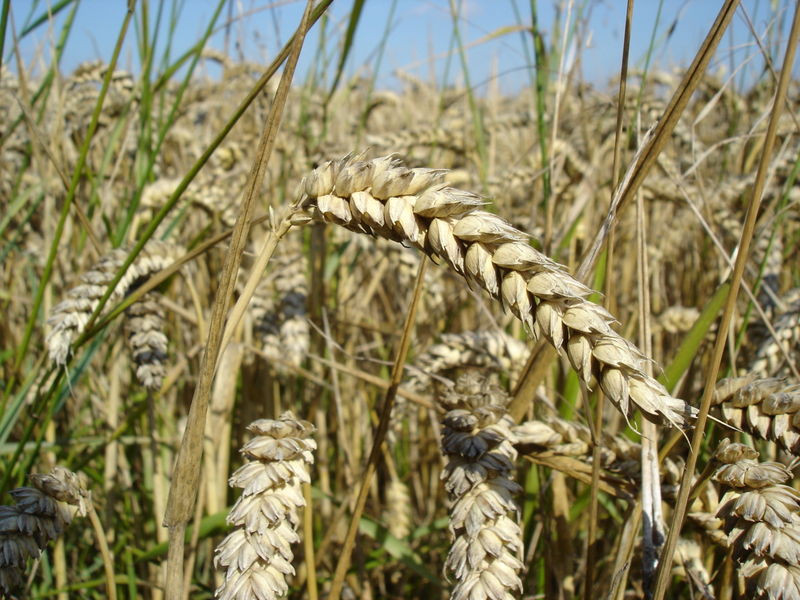
I got out of the car, careful to look for fire-ant mounds, and walked to the edge of the field. Glossy and tan, the stalks stood just past my knees, the long hair surrounding the kernels now visible at close range. They looked like the thin beards of old men, swaying in the wind. I had to yank hard to break one off its stem. Instead, the whole stalk came out of the ground with a clump of earth and my face flushed from the shame of thievery as I hurried to break it from its roots.
Back in the car, the girls squealed with delight. Hannah immediately smelled it, as she does everything, and declared it had no smell. Bethany waved it like a baton. I felt the fatness of the kernels and the rough shells that made my fingers stick and lose their way.

“So this is where bread comes from.”

I squeezed some of the kernels between my fingers and they turned into a pulpy, starchy mash. Brad said he hated harvesting wheat. He would itch like crazy as he walked through the fields in his hometown, the sickle rubbing blisters in his hand. I remembered the threshing floor for his village, just on the outskirts of his hometown. He had pointed it out during a winter visit when the snow dusted the dirt behind the mill.

“So if I dried this and crushed it, it would become flour?”

“It’s not that easy,” he said. He explained that after cutting it, you had to lay it on the dirt and dry it for a day or two, then walk on it to separate the kernels from the stalks. Then the thresher stood in the middle of the pile and threw the mess outward, with a pitchfork. If you did it right, the wind would catch the hulls and hairs and dirt and lay them in a circle around you. The heavier grain, now dried and separated, would travel further, forming an outer circle around the chaff.

The chaff pricked and itched and got in your sweaty clothes, rubbing you as you worked. The dust blew in your hair and eyes. Your shoulders ached from working the tools. Then you gathered up the outer band and pulled out the rocks before storing it in a bag. If you wanted, say, fifty pounds of flour, you removed the grain, picked out the smaller stones and washed off the mud and dirt. The kernels had to dry in the sun before you could take them to the miller. The miller would ask you, do you want it ground fine or coarse? And the miller would grind the kernels between the stones that had been there since the Qing dynasty.

The wind laid down the heads of the bearded ones as Brad steered the van back onto the road. Hannah tickled Bethany with the stalk of wheat as we drove south on the asphalt road in far north Dallas where the field became a suburb and the suburb became a city.